

The ground was still warm when the families came back to it.
Mothers sat with infants on their laps. Old men stood at the edges of walls that no longer existed. Children poked at black earth looking for something, anything, that had not turned to ash. The April sun pressed down without mercy, and the people of Vikas Nagar stood inside the ruins of everything they had built, with nowhere to go and nothing left to go back to.
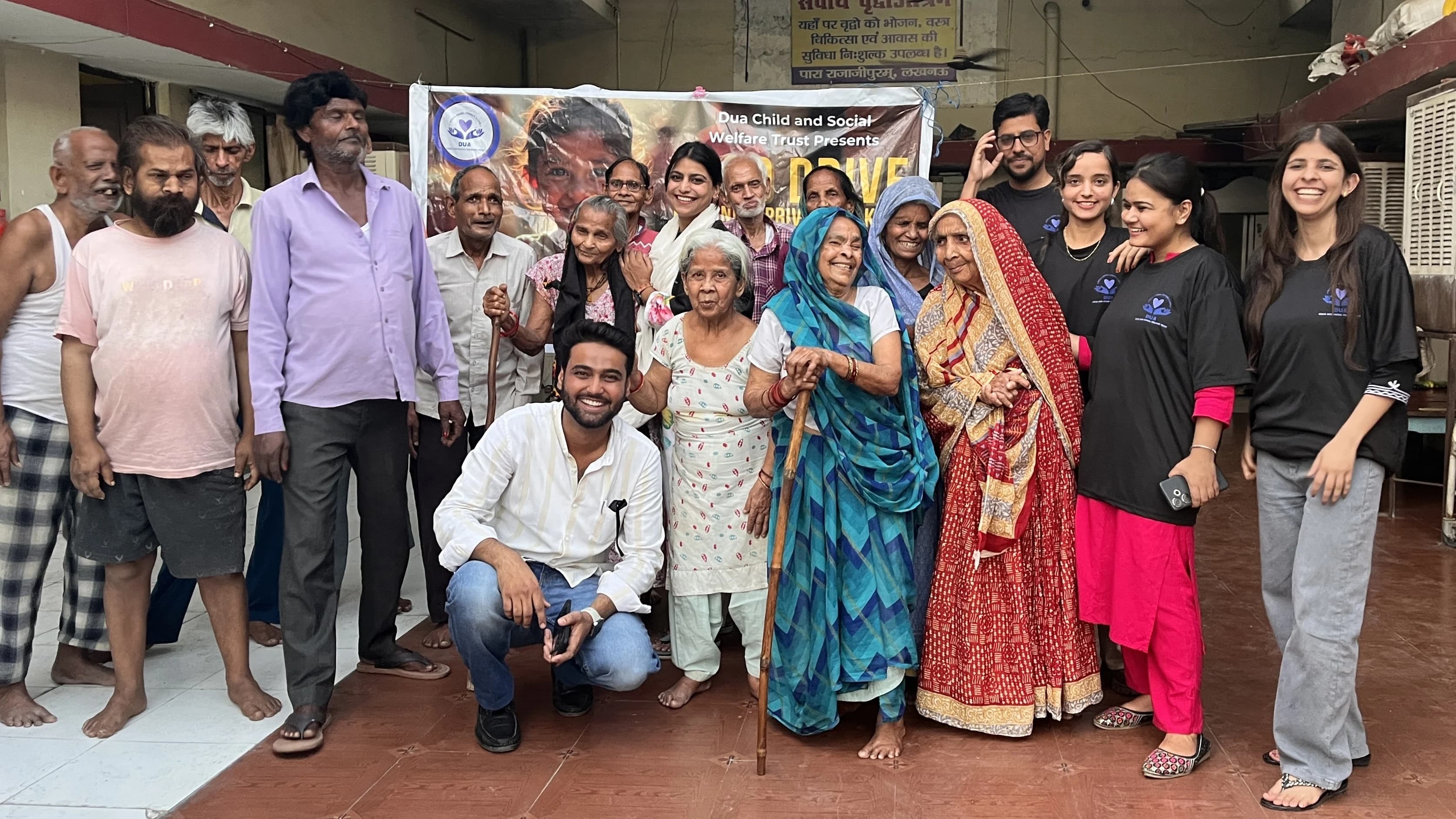
This is what the team from DuaChild and Social Welfare Trust walked into on April 18, 2026, three days after one of the most devastating fires Lucknow had seen in recent years.
The Night Vikas Nagar Burned
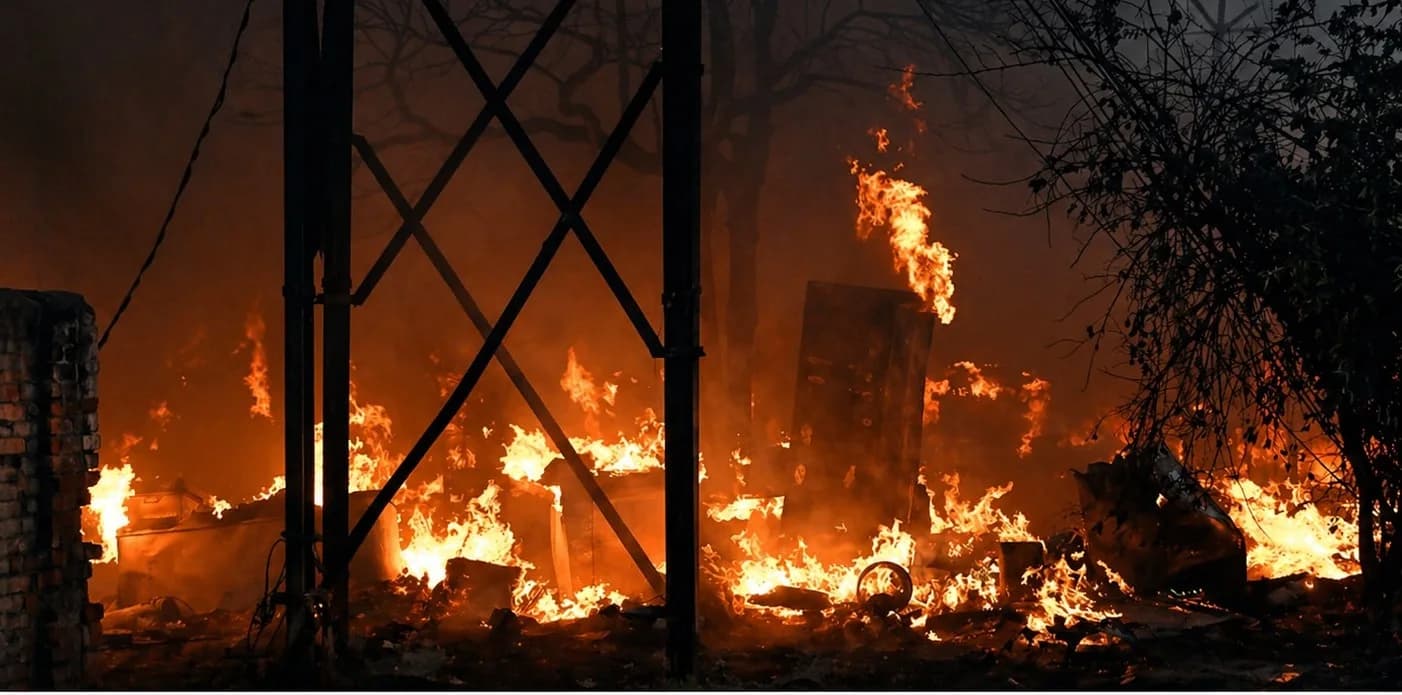
On the evening of April 15, 2026, a fire broke out in the densely packed workers' settlement near Sector 12 and Sector 17 in Vikas Nagar, Lucknow. Within minutes, it had spread from one home to the next. The shanties, built from tarpaulin sheets, dried grass and plastic, gave the fire everything it needed. Strong winds did the rest.
LPG cylinders stored inside the homes began to explode, one after another, loud as bombs. Eyewitnesses counted over twenty explosions in quick succession. People ran into the lanes carrying whatever they could grab. Some ran back in to save more. Some came out with burned hands and feet. Some did not find what they went back for. By the time the flames were finally brought under control, over 200 to 300 homes had been reduced to ash and rubble. More than 1,000 people, daily wage workers, domestic helpers and migrant families who had come from Barabanki, Sitapur and other parts of Uttar Pradesh, were left with nothing but the clothes on their backs.
Two young children lost their lives.
The fire did not ask whether they could afford to rebuild. It never does.
Lucknow Responded and the City Did Not Look Away
What came next is something worth saying out loud.
Within hours of the fire, the people of Lucknow poured in. Not in ones and twos but in waves. Individual volunteers carried cooked food. Donors sent money. Organizations mobilized relief kits. Local residents brought water, clothes and medicines. By the time our team from DuaChild and Social Welfare Trust reached the site on April 18, food was already surplus. The people of this city had ensured that the victims were being fed. Hunger, the most urgent and visible wound of any disaster, was already being addressed by hundreds of strangers who asked for nothing in return.
There is no other word for it except humanity.
"When we reached the site, we saw that food was already being distributed in abundance. Lucknow had taken care of its own. So Dr Heena Khan stopped, looked more carefully, and asked a different question. What need is no one else meeting right now?"
What Dr Heena Khan Saw That Others Had Not Yet Noticed
Dr Heena Khan, who leads DuaChild and Social Welfare Trust, walked through the affected area with her team. She watched the families closely. Where they were sitting. How they were managing the hours between meals. What the ground looked like beneath them.
The earth was scorched and covered in debris. The April heat in Lucknow is brutal even on ordinary days. These were not ordinary days. And family after family, mothers with newborns, elderly women, young children, were sitting directly on that ground. They were not leaving. This was still their home, even if home was now just a memory and a patch of blackened earth. They would stay until something changed.
And they were barefoot.
In the chaos of the fire, many had run out with no footwear at all. Some had gone back into the burning lanes to save belongings and had burned their feet and hands in the process. Now they stood and sat on ground covered in ash, broken glass and debris, with nothing to protect them.
Dr Heena Khan made a clear decision. Mats to sit on. Chappals for their feet. That is what these families needed right now and that is what the team of DuaChild and Social Welfare Trust would focus on delivering.
What We Distributed and Why Each Item Was Chosen
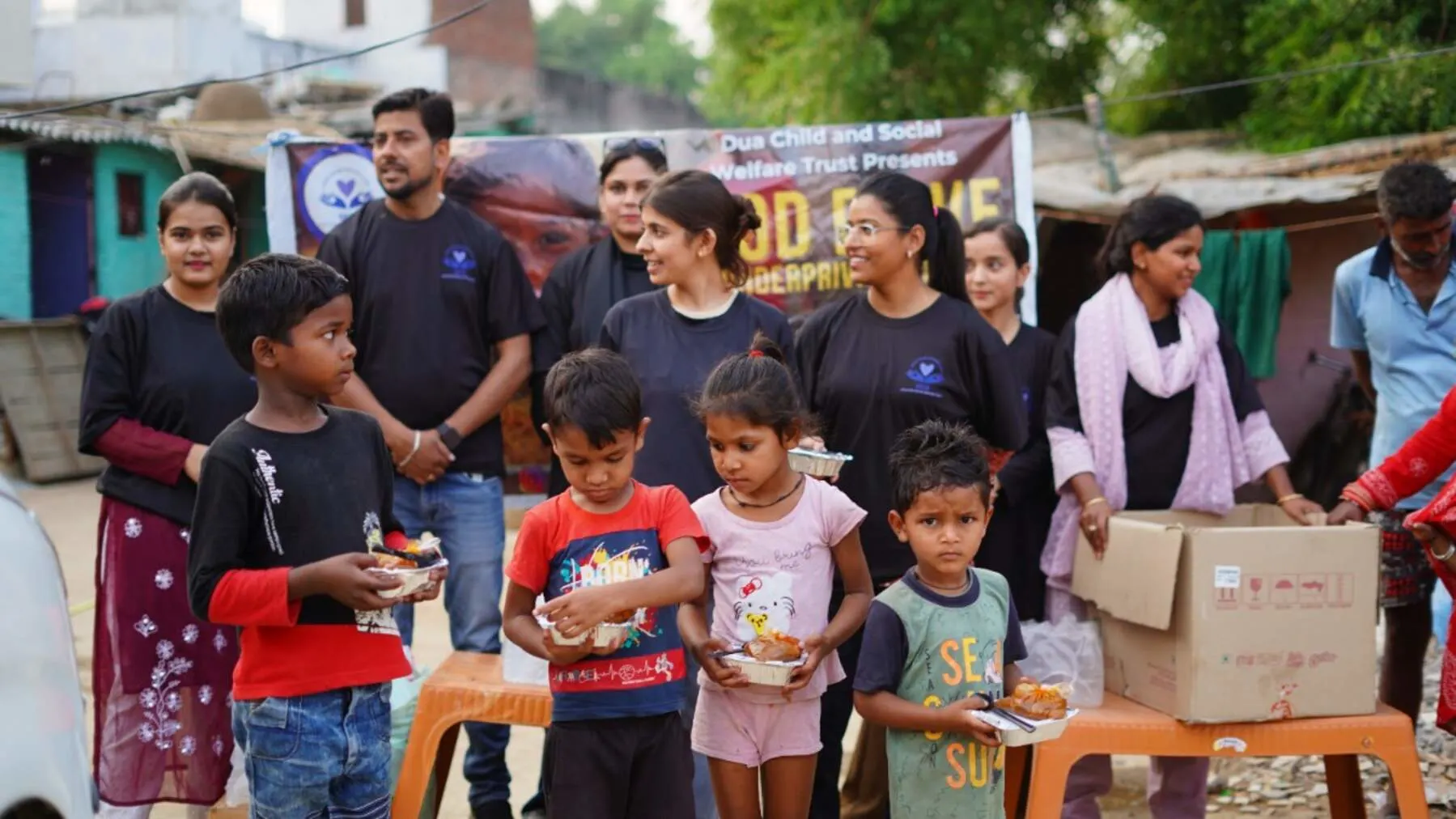
On April 18, 2026, the DuaChild and Social Welfare Trust team distributed the following at the Vikas Nagar fire relief site in Lucknow.
Mats for the families to sit on. With everything burned, families had nothing between them and the scorched ground. Sitting directly on debris in extreme heat causes real physical harm, especially for infants and elderly individuals. Providing mats gave families a surface to rest on, to feed their children on, to sleep on through the night. It was a small thing with a large impact.
Chappals for those who were barefoot. This was an urgent need that had gone unnoticed in the rush of larger relief efforts. Feet burned during the fire, or walking on hot, broken ground for three days, needed basic protection. Every pair of chappals handed out meant one less person walking on ash and debris with exposed skin.
Milk, bread and packaged food items. Suggested by volunteers who understood the ground reality. While cooked meals were being provided throughout the day, families with infants and very young children needed items they could use through the night and in the early morning hours without depending on a distribution schedule. Packaged and ready items filled that gap.
Each of these decisions came not from a planning document but from standing in the middle of the situation and looking at the actual people in front of us.
A Moment That Stayed With Us
There was a woman sitting near where her door used to be. She had an infant on her lap and was fanning the baby with a torn piece of cardboard. Her feet were bare and flat against the hot ground. Her eyes were not crying anymore. They were just tired.
A volunteer from our team placed a mat beneath her and set down a pair of chappals. She looked up. She did not say anything. She slipped on the chappals, smoothed the mat with one hand, and shifted the infant into a more comfortable position. Her shoulders dropped just slightly.
That is the work. Not always the dramatic rescue or the large number. Sometimes it is a mat and a pair of chappals that tell a person: you are still seen. Someone came. You are not forgotten.
Why the Vikas Nagar Fire Is Part of a Larger Story
The families who lost everything on April 15 were not strangers to hardship before the fire. Most were migrant workers and daily wage earners who had built their lives in an informal settlement that the city around them barely noticed. There was no insurance, no savings buffer, no government scheme that would cover what was lost in those two hours.
When a fire like this happens, it does not just destroy the physical structure of a home. It destroys the school certificates kept in a plastic folder under the mattress. The identity documents needed to access any government support. The gold earrings kept for a daughter's wedding. The cash saved in a tin box because there is no bank account. Years of effort, gone in minutes.
Rebuilding will take months. The need for sustained, thoughtful support, not just in the first seventy two hours but in the weeks and months that follow, is real and ongoing. What April 18 showed is that when people choose to look carefully and act on what they see, even the gaps that seem invisible can be filled.
To Every Person Who Showed Up in Lucknow
This article would be incomplete without saying this directly.
To every single individual, volunteer, donor and organization that came to Vikas Nagar after the fire, with food, water, clothes, medicine or simply with their presence, thank you. To every person in Lucknow who gave something, who did not scroll past, who carried a box or sent a payment or cooked a meal or just showed another human being that they mattered, thank you.
What you did in those days was not small. It was the reason that when our team arrived, the people of Vikas Nagar were being cared for. You gave us the space to look for the next need. That is a gift.
Humanity did not fail in Vikas Nagar. If anything, it was more visible there in those days than it is on most comfortable days in this city.
The families of Vikas Nagar are still rebuilding.
The cameras have moved on. The headlines have faded. But the families are still there, on that same ground, putting their lives back together piece by piece. Your support, however small, funds the next mat, the next pair of chappals, the next essential item that tells a family they have not been forgotten. Every rupee goes directly to the field, with no deductions.
Support the Relief Work