

She Said She Cannot Afford Pads Every Month. Dr. Heena Khan Listened and Then Acted.
By Vishal Kumar Content Strategist and Field Documentation Lead, Dua Child and Social Welfare Trust 29 December 2025
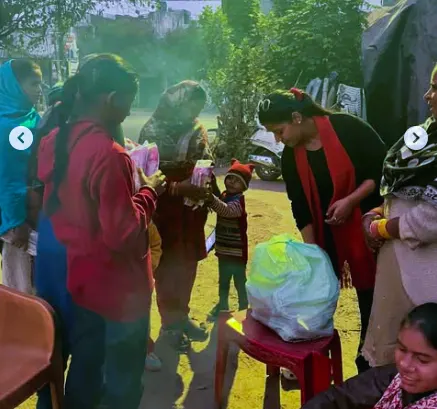
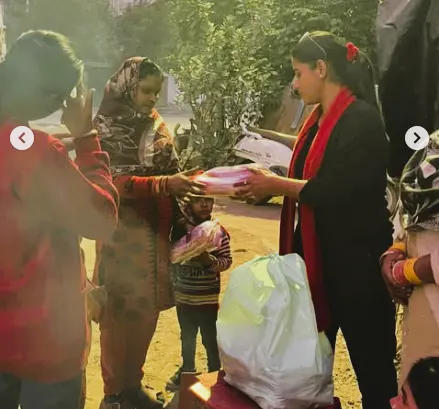
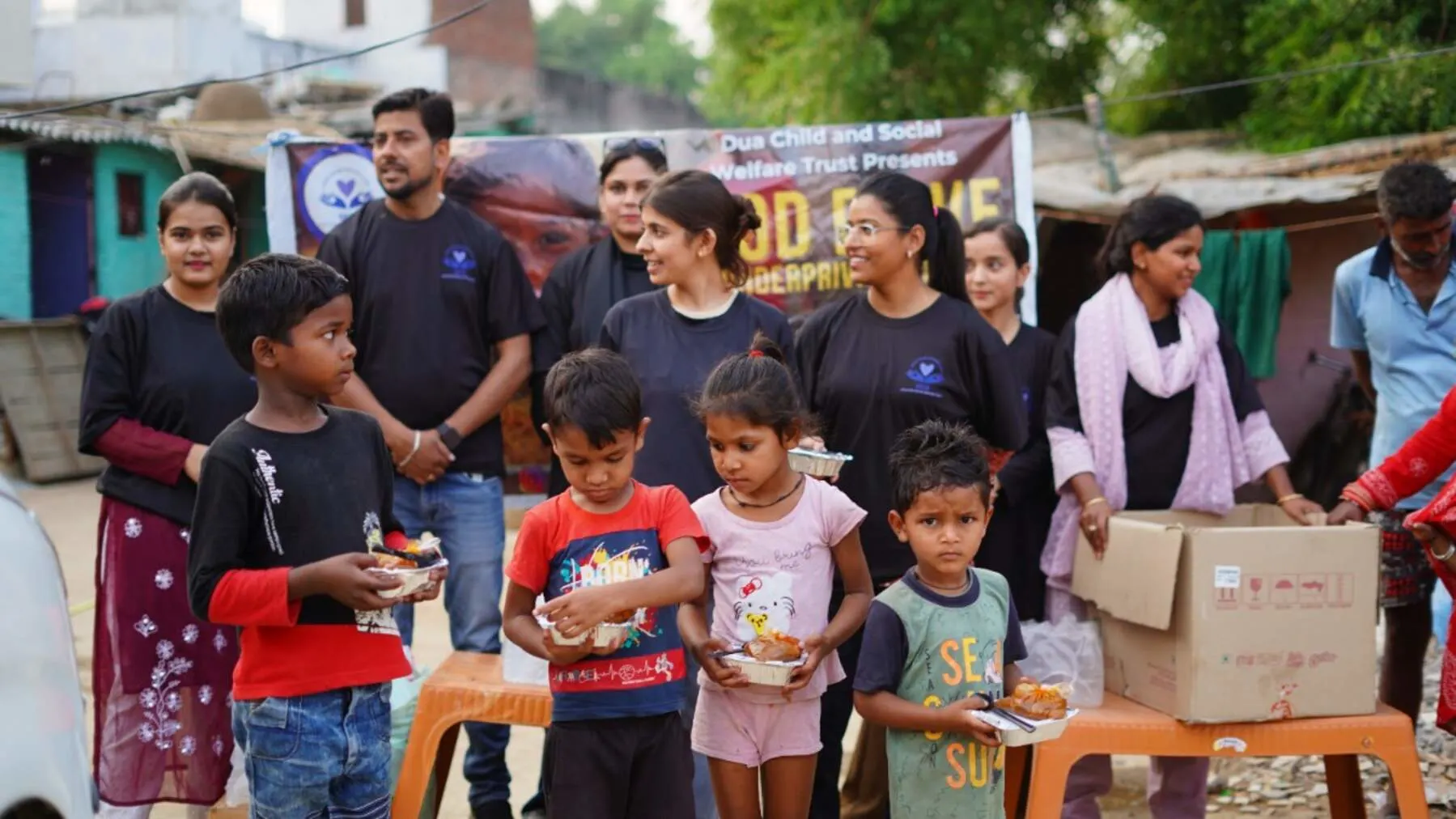
The lane beside the nala smells of damp concrete and open drains. Jhuggi chappar clusters line both sides. Tarpaulin sheets pulled tight over bamboo frames. Small homes where five or six people live in a single room. On the evening of 29 December 2025, Dr. Heena Khan and Aamina Khan walked into these lanes with a team of volunteers, carrying cartons of sanitary napkins and one clear intention: no girl in this community should manage her period in silence, in shame, or with a dirty cloth.
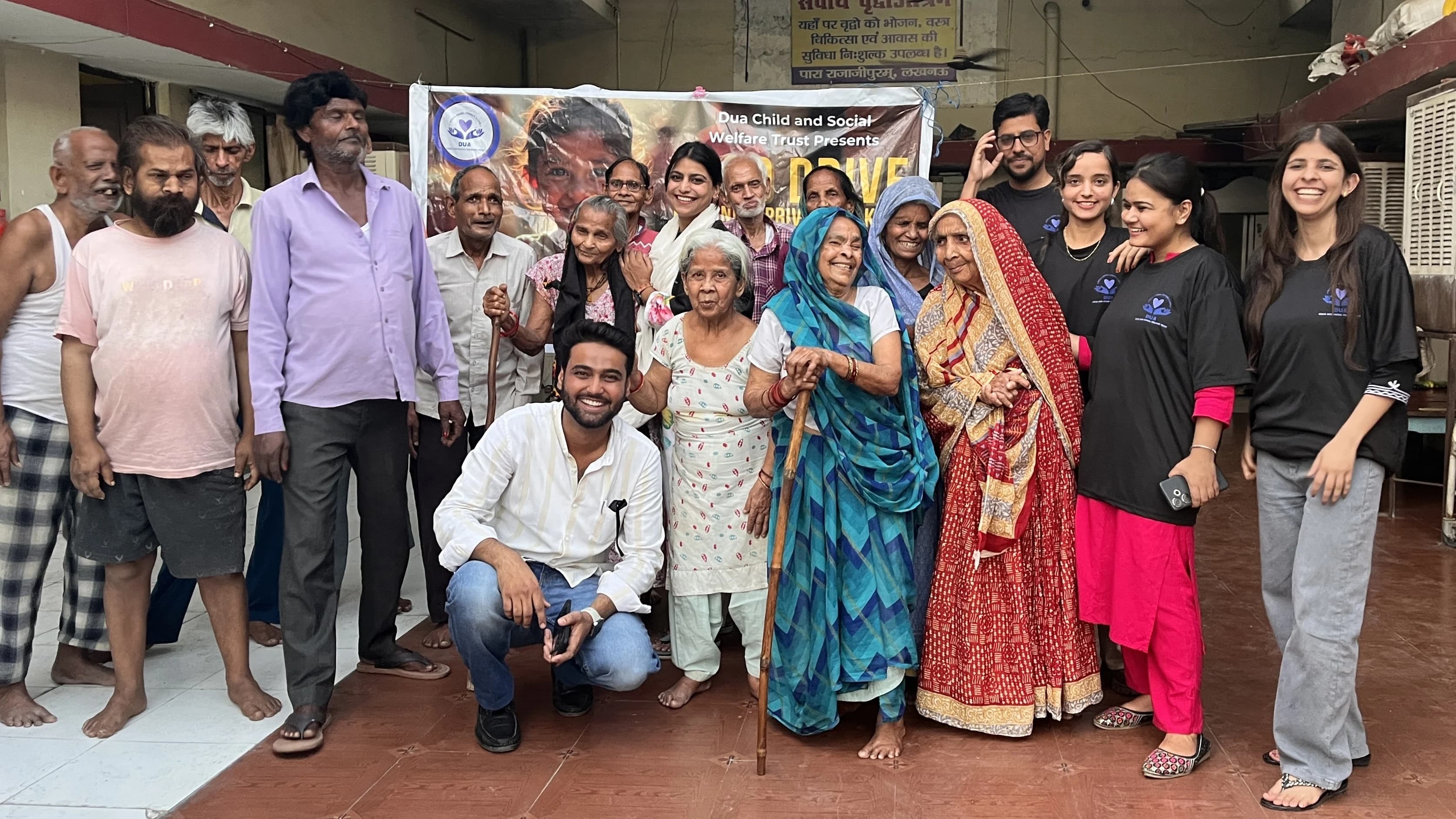
This was not a token gesture. It was a hygiene drive planned and executed by the Dua Child and Social Welfare Trust, a Lucknow based NGO built around the belief that dignity is not a privilege reserved for those with money.
The Problem That Stays Hidden
Menstrual hygiene remains one of the most underdiscussed health crises in urban slums. According to UNICEF, half of all adolescent girls in India cannot afford sanitary napkins or tampons during menstruation.
Data from India's National Family Health Survey NFHS-5 shows that in low income and slum settings, consistent use of hygienic menstrual protection is as low as 43 percent compared to 68 percent in urban areas. That gap has real consequences. Higher rates of reproductive tract infections. School absenteeism. Shame driven isolation that pushes girls further away from education and opportunity.
The women living beside the nala in Lucknow are not a statistic. But the statistics describe exactly them.
Being a doctor by training, Dr. Heena Khan understands this not just as a social problem but as a medical one. Unhygienic menstrual materials, primarily reused cloth, carry serious infection risks. For a woman already managing poverty, that risk compounds quietly over years. The Dua Child and Social Welfare Trust has made menstrual hygiene a core part of its humanitarian work in Lucknow because of this exact reality.
What the Team Did on the Ground
Dr. Heena Khan led the drive personally. Aamina Khan coordinated the logistics, making sure every household in the cluster was reached before the team moved on. Four volunteers worked alongside them, going door to door through the jhuggi chappar settlements.
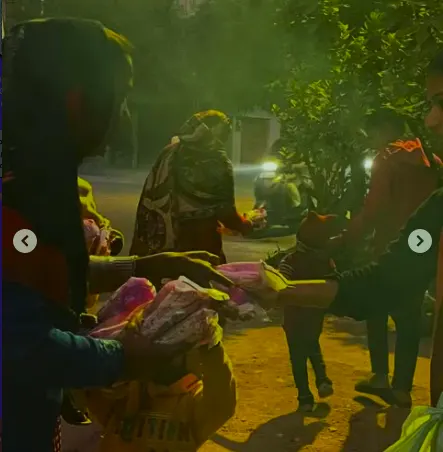
Over 100 girls and women received sanitary napkins. But the distribution was only part of what happened that morning.
Dr. Heena Khan spent time with each group explaining why menstrual hygiene matters, not in clinical language, but in words that connected with lived experience. She told women which products to look for, what to avoid, and how to access quality pads at almost no cost through a government scheme that most of them had never heard of.
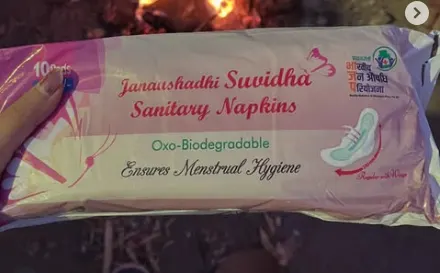
She introduced women to the Jan Aushadhi Suvidha scheme under the Pradhan Mantri Bhartiya Janaushadhi Pariyojana. Through this scheme, oxo biodegradable sanitary napkins are available at just Rs 1 per pad at over 15,000 Jan Aushadhi Kendras across India. A pack of four regular pads costs Rs 4. The same product retails for Rs 30 to 40 in the open market. Dr. Heena Khan shared the location of the nearest Kendra directly on women's phones using the Jan Aushadhi Sugam app.
Aamina Khan made sure every woman left with not just pads but with a clear understanding of where to go next. That sustainability, converting a one time drive into a lasting change in access, is central to how the Dua Child and Social Welfare Trust works.
Drive at a Glance
100+ women and girls reached 4 volunteers on the ground Rs 1 per pad available via Jan Aushadhi Kendra 29 December 2025, jhuggi chappar settlements, nala area, Lucknow
Sakshi's Story
Sakshi is a single mother of two daughters. She works daily labour in the neighbourhood and brings home whatever the day allows. Sometimes enough for a meal. Sometimes not. When Dr. Heena Khan asked her about pads, Sakshi paused before speaking.
"Meeting basic needs is already difficult," she said quietly. "Pads are not something we can buy every month."
Dr. Heena Khan did not move on. She stayed with those words. Then she explained the Jan Aushadhi scheme, pulled out her phone, and showed Sakshi the nearest Kendra on the map.
Sakshi looked at the screen for a moment, then said something that stayed with everyone present.
"Pata hi nahi tha ki itna sasta milta hai. Humein toh bas dard mein hi rehna padta tha." (I never knew it was available this cheaply. We were just supposed to stay in the pain.)
She left with pads in her hands and a government resource on her phone. Not charity. A path forward.
Every dua can change a life.
Why This Matters Beyond One Drive
Period poverty in India is not a niche issue. An AC Nielsen and Plan India study referenced in government documentation found that at least 20 percent of girls drop out of school due to menstruation related challenges. Research published in Scientific Reports in 2023 found that in low income settings, only 43 percent of women use hygienic menstrual materials consistently.
For Dr. Heena Khan, founder of the Dua Child and Social Welfare Trust, this drive was rooted in something professional and personal both. As a doctor, she has seen the downstream medical consequences. Reproductive infections. Untreated pain. Conditions ignored for years because a woman could not afford basic hygiene. As the person who built this organisation from the ground up in Lucknow, she also understands what silence costs.
"Being a girl in a slum already means carrying a hundred silent burdens," she said during the drive. "We cannot fix everything in a day. But we can make sure no woman here walks away without knowing her options."
The humanitarian work of the Dua Child and Social Welfare Trust in Lucknow has consistently prioritised communities that are geographically visible but institutionally invisible. Living next to the city's infrastructure. Unseen by it.
An Ongoing Commitment, Not a One Time Event
Aamina Khan has been clear from the beginning that drives like this one are not photo opportunities. Every drive the trust runs is followed by community mapping. Identifying households that were missed. Women who need follow up. Resources they can be connected to that last beyond the day of the drive.
The trust also recognises that not every girl in these communities can access even the Jan Aushadhi scheme. Some live too far from a Kendra. Some cannot leave their households. Some do not own a smartphone. These gaps are exactly why physical distribution drives remain necessary even when government schemes exist.
The December 2025 drive was not the first. It will not be the last.